
Trip Date: August 30, 2025, Posting Date: Dec 30, 2025
Sandy:
What Took Me This Long To Post This?
Between May 19th (stepping off the plane from my conference in Florida) and now, life transformed into a focused, high-performance tunnel. Days blurred into research, writing, and work where sunlight occasionally appeared through a window — like a rare natural phenomenon one only reads about.
Right after the conference, we made a strategic Yosemite stop — not just casual sightseeing, but a purposeful reconnaissance mission. Since we’ve already ticked off Braille Book and Epinephrine, and NEB (NorthEast Buttress of Higher Cathedral) is widely regarded as a stepping stone toward the legendary Steck-Salathé OW/Chimney suffer-fest, it was time to scope out the terrain properly, eyes open, notebooks metaphorically in hand.
We also ran Half Dome via the standard tourist approach (Mist Trail → Little Yosemite Valley) to assess logistics for the Regular Northwest Face. It was fun in running vests. With full climbing equipment and overnight weight? Less likely to be described as “fun.” We may still choose Death Slabs — if only because misery is shorter when it’s direct.
Then came a stretch of life that could generously be described as Olympic-level intensity:
- Averaged 45 hours/week of PhD research
- While also working full-time as a Principal Engineer at Ampere Computing
- Wrote 160 pages of dissertation material, with additional chapters forthcoming as the final research question reaches conclusive resolution.
- Authored a 10-page journal manuscript and submitted to a reputed cybersecurity journal
- Architected and built a post-silicon DDR (Double Data Rate interface for DRAM memory) debug tool with only one junior engineer — launched its alpha version internally
- Designed and polished a full proposal-defense talk and completed a practice round with our research group
- Then, because balance is a myth, went on a 3-day Red Rocks scouting trip and our annual Palm Springs hill-running ritual (Dec 19–29)
So yes — I needed time.
Time to step out of that tunnel, breathe, re-emerge as a person, and finally give this climb the write-up it deserved.
And now, here it is — still before 2025 ends. Only four months late. That’s basically on time.
Why This Trip Mattered?
This climb was a milestone — our first 5.10+ Grade IV where the default state of most pitches is 5.10.
Both of us are firmly in the 5.10 trad leading world:
- Rick red-pointed half a dozen 5.11 trad routes, onsighted over half a dozen 5.10+ (see table below), and has red-pointed two dozen 5.10+ pitches
- I, slightly more mortal, but equally ambitious, lead solid 5.10 trad and was ready to suffer gloriously
Having previously completed six other Grade IV routes — including
- Epinephrine (Red Rocks, Las Vegas)
- Angel’s Crest (Squamish, BC)
…it was time to attempt something harder, as a test-run and calibration event for our long-term prize:
The Grand Wall (5.11a A0, Squamish)
| Name of route | Place | Grade |
|---|---|---|
| Kunza Korner | Southern Tip, Smith Rock | 5.10c |
| Morning Star | Star Wall, Lower Gorge, Smith Rock | 5.10c |
| Prometheus | Catwalk Cliff, Lower Gorge, Smith Rock | 5.10c |
| Last Chance | Catwalk Cliff, Lower Gorge, Smith Rock | 5.10c |
| Original Sin | Hand Job Wall, Lower Gorge, Smith Rock | 5.10c |
| Suzuki | Main Wall, Trout Creek | 5.10+ |
| Groovy Guru | Commonwealth, Murrin Park, Squamish BC | 5.10c |
| Exasperator | Grand Wall Base, Squamish BC | 5.10c |
The Build-Up – A Summer of Forced Preparedness
We originally planned to climb Sunset Strip during our July 20–26 Squamish trip… …but the route was closed for falcon nesting. When the locals are raising their young on the crux pitches, you don’t argue — you come back later.
We got home and entered monk-mode. Three days a week on indoor ropes, bouldering, and the 40-degree Kilter/Tension board trying to humble us — plus one outdoor day every weekend, because the only antidote to leading fear… is more leading. Ozone, Broughton Bluff, Smith Rock — every weekend became a training montage to be “ready” for Labor Day weekend.
The Route — Sustained, Technical, and Just Humbling Enough to Make Us Better
My 10 lb (4.5 kg) pack — 3L of water, shoes for both of us, layers and some snacks — turned out to be more weight than the weather warranted. The day was comfortably cool and overcast, and the route held shade nearly the entire way. Sun doesn’t touch the lower pitches until about 2 p.m., and by then we were well above, topping out at 5:17 p.m.
The style of climbing?
A sampler platter of granite you never asked to taste all at once:
- Relentless liebacks
- Bulges and roofs designed to make forearms question their existence
- Burly offwidths (emotional trauma included)
- Delicate, technical slabs where your feet negotiate like lawyers
- A heady traverse that whispered “hope you slept well”
- A horrendous Bombay chimney whose very existence is a war crime
Technically, pitches 3, 6, 7, and 8 are “slightly easier,” but I would never call them soft. This route keeps you at fighting grade nearly the entire way.
Rick — of course — onsighted every pitch. To be fair, the man floated — no pack, just the gentle tap-tap of cams. I, on the other hand, hauled 4.5 kg on the steepest sections, because apparently I enjoy difficulty with interest. He moved with that steady, methodical power I’ve seen only a few times, and even when the climbing pushed him, he never cracked. We also had company: two Taiwanese climbers who followed our system almost exactly — one person leading every pitch — except their leader was hauling everything himself: shoes, layers, water. He told us he was predominantly a sport climber, with a hardest send of 5.14b, yet even he admitted the offwidths and chimneys stirred a little uncertainty. Despite the load on his back and the unfamiliar style, he climbed fast — staying just behind me all the way up.
When we reached the final chimney pitch, he paused, looked at Rick, and said with genuine awe, “Wow, dude — you onsighted every pitch. You are so strong.” And then, for the finale, he and his partner became the cheer section — three voices below, watching Rick slither upward between spaced bolts like a seasoned granite creature claiming his habitat.
| Logistic Item | Details |
|---|---|
| Climb start time | 7:47am |
| Party on the route | We were the second party |
| Group climb time | 9 hours 40 minutes (no wait) |
| Summit time | 5:17pm (no exposure to Sun on any pitch) |
| Rope | 8.9mm 60m |
| Rack | Double rack with a single #4 |
| Slings | 8 singles |
| Quick draws | 3 (17cm each) |
| Anchors on the climb | All bolted anchors |
| Linking of pitches | 1,2; 4,5; 7,8 |
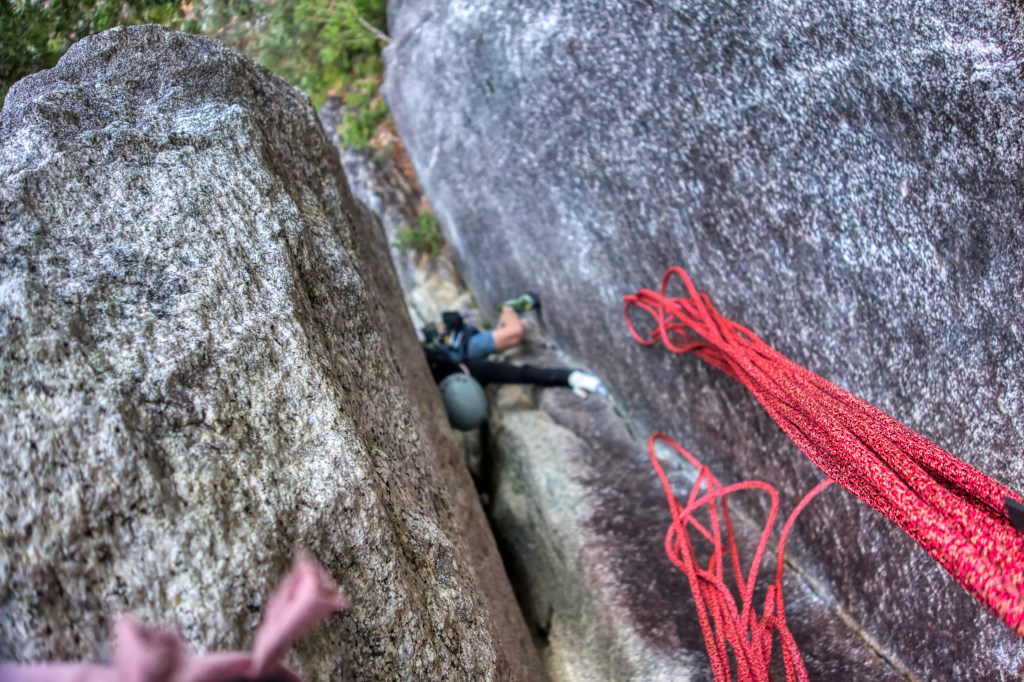
Enjoy the pitch-by-pitch beta, gear notes, and the exact sections where the rock personally tried to humble me — all included in the photo captions. Pitch grade and length are from the guidebook.
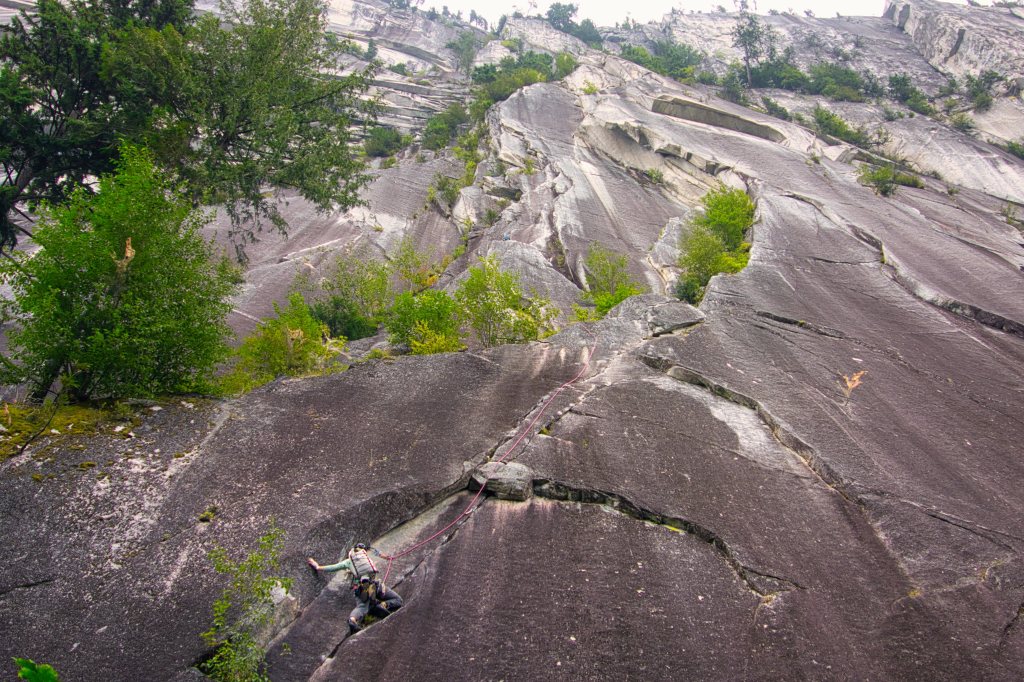

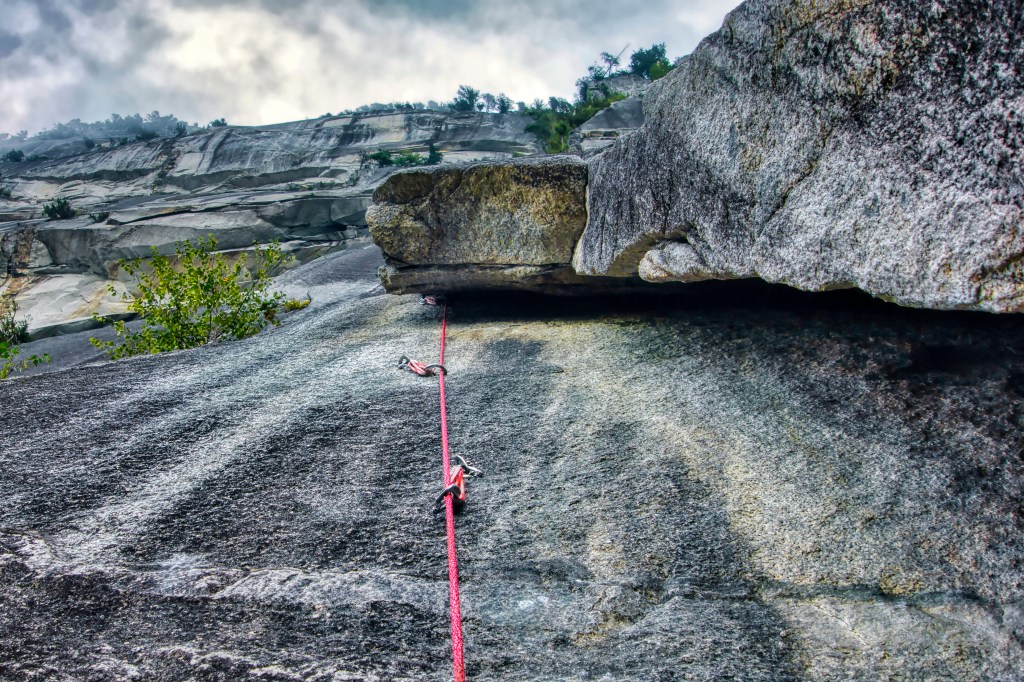
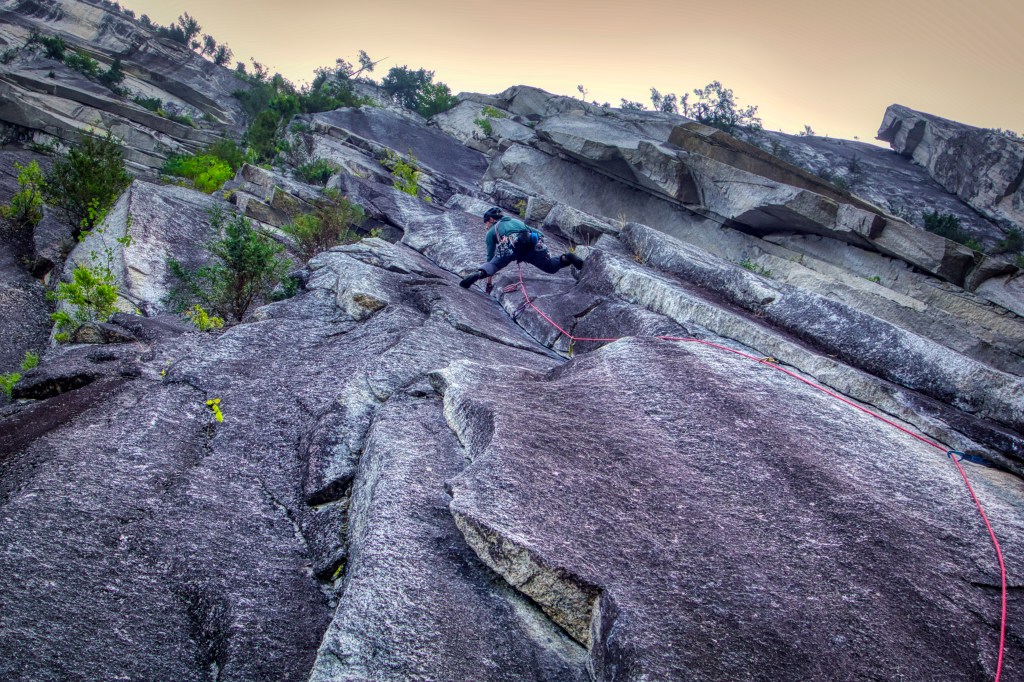
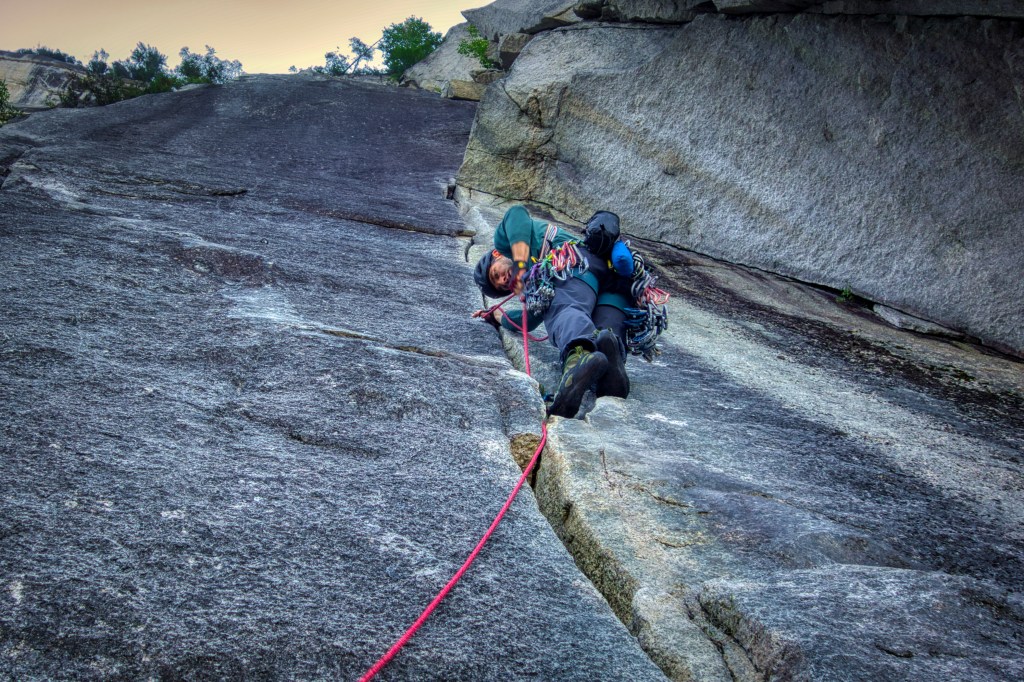
1️⃣ left-foot jam with right foot on the edge,
2️⃣ the stance where Rick is standing, and
3️⃣ a small ledge just above his head.
At the roof corner, there is a bolt on the left. As the guidebook promises, getting past that bolt is tougher than it looks — mainly because there are zero jugs, zero hero holds, and not even a decent left-foot option to negotiate the roof/bulge. From my perspective, this was the second strenuous / “struggle-fest” pitch for me on this route.
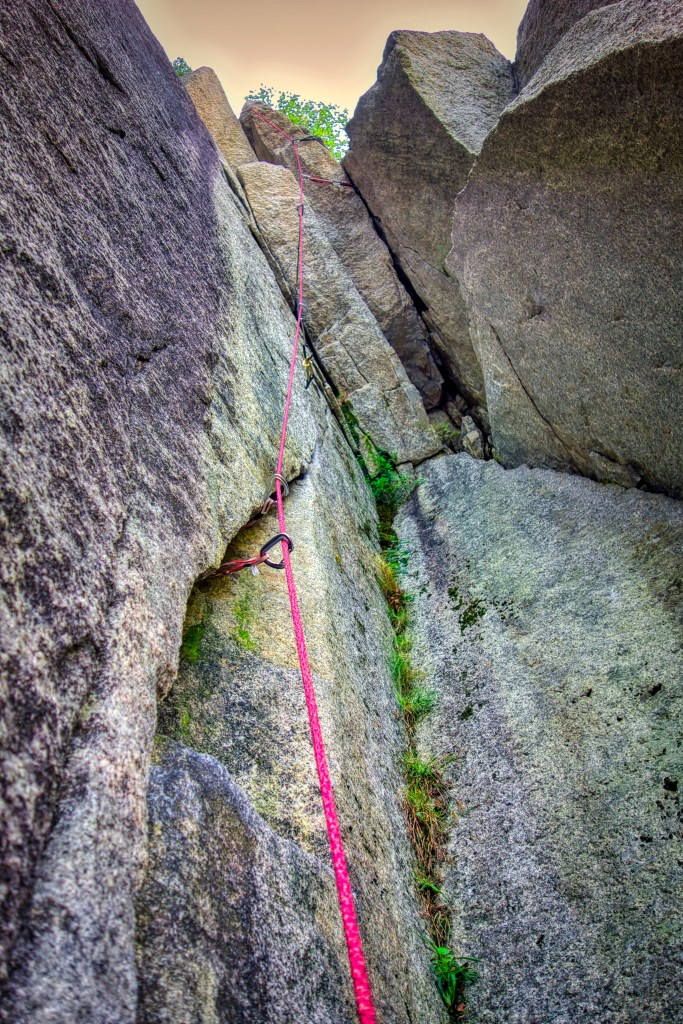
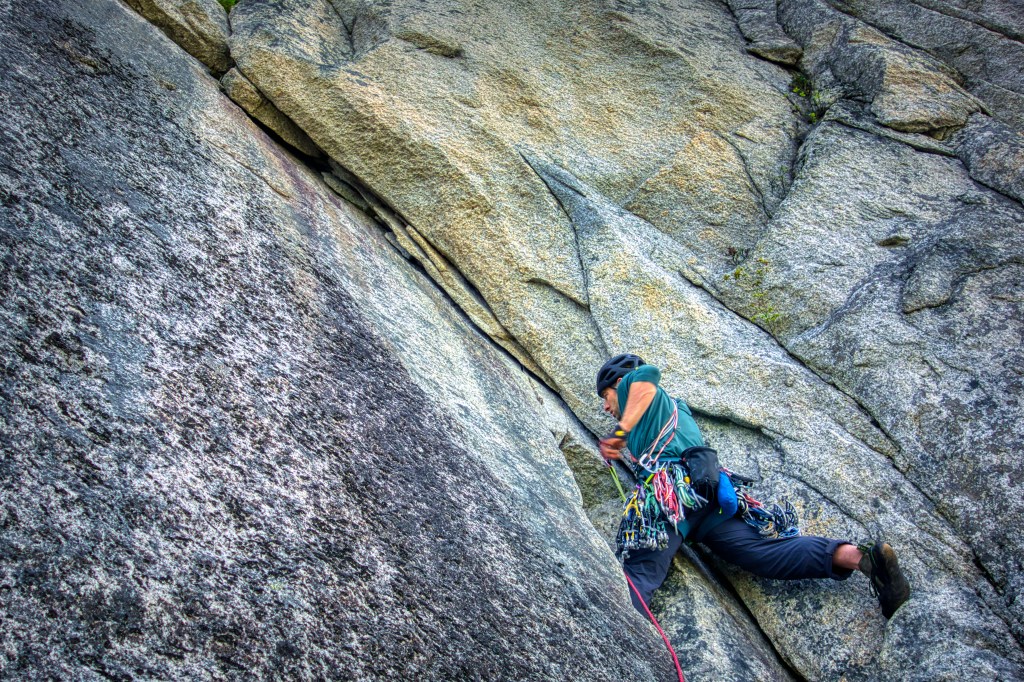
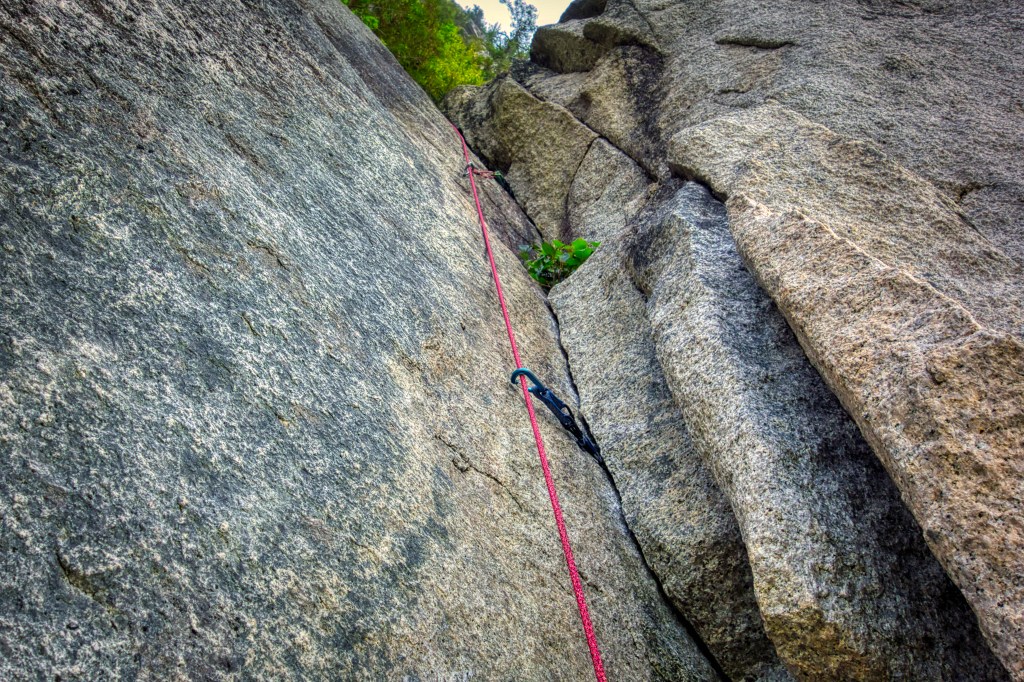

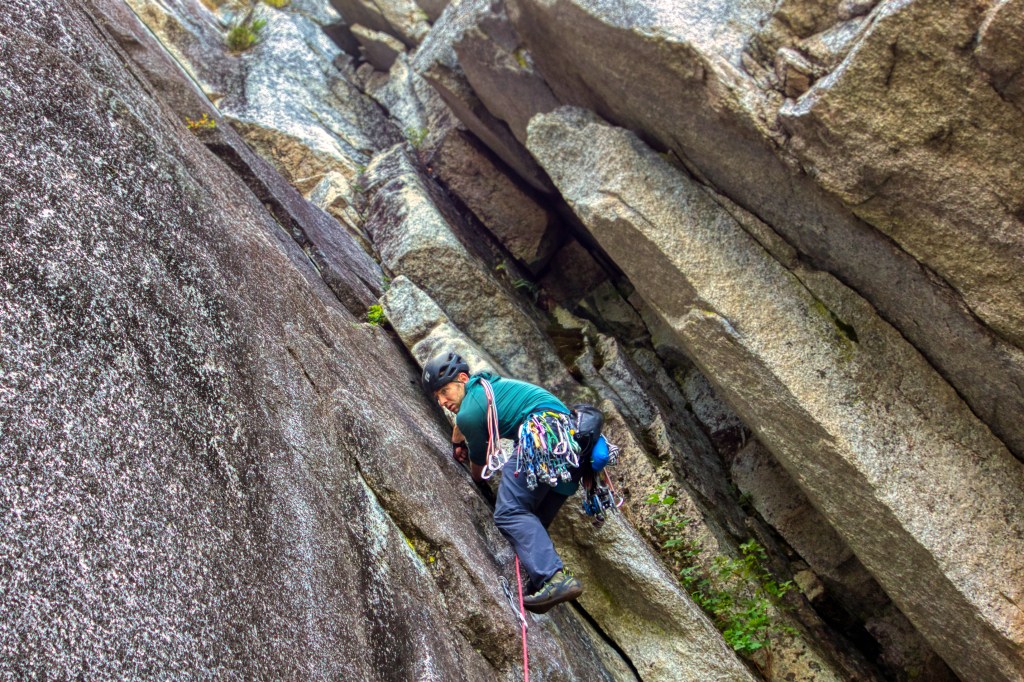
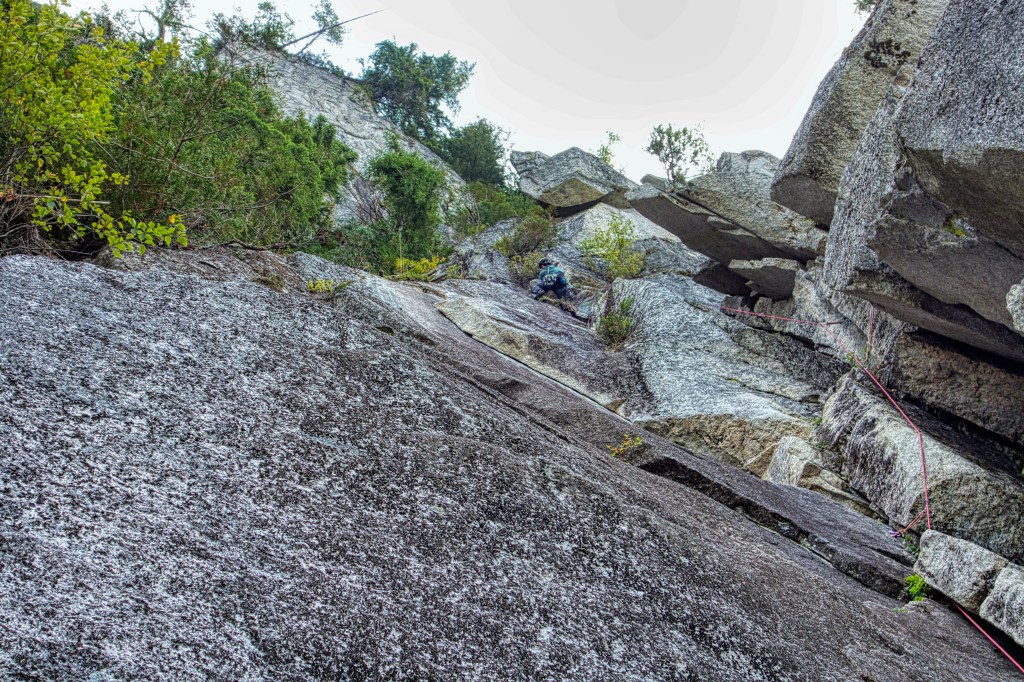
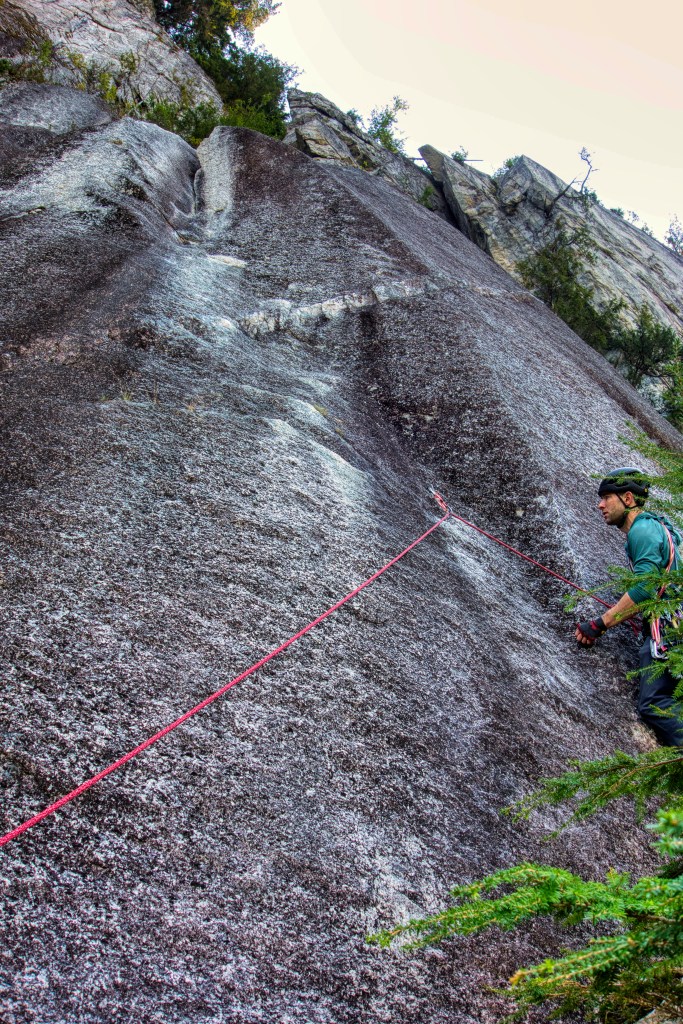
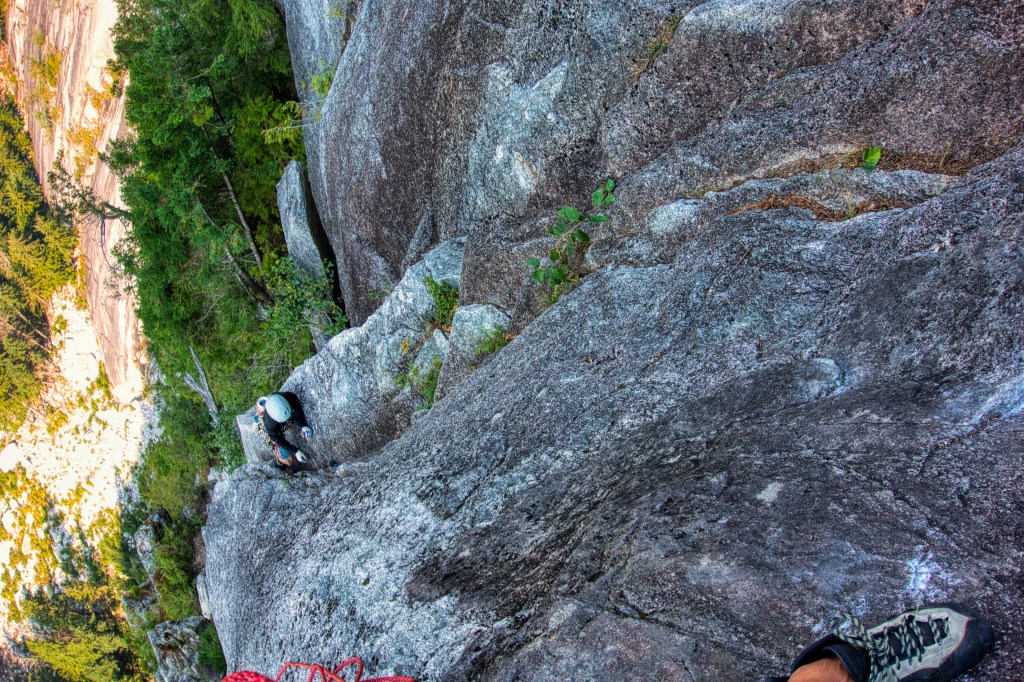
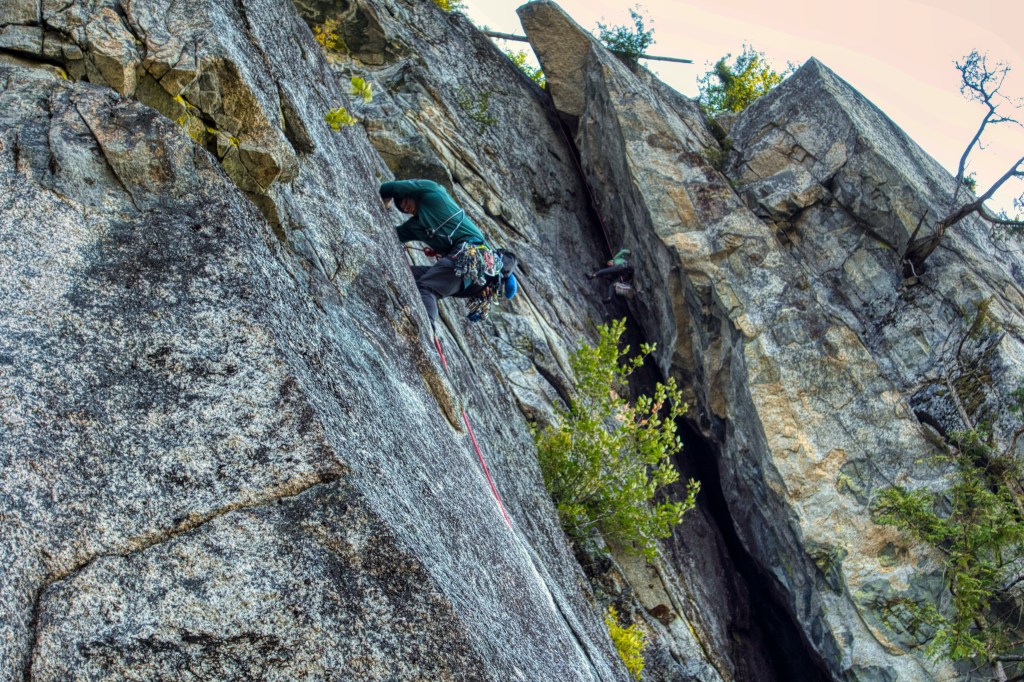

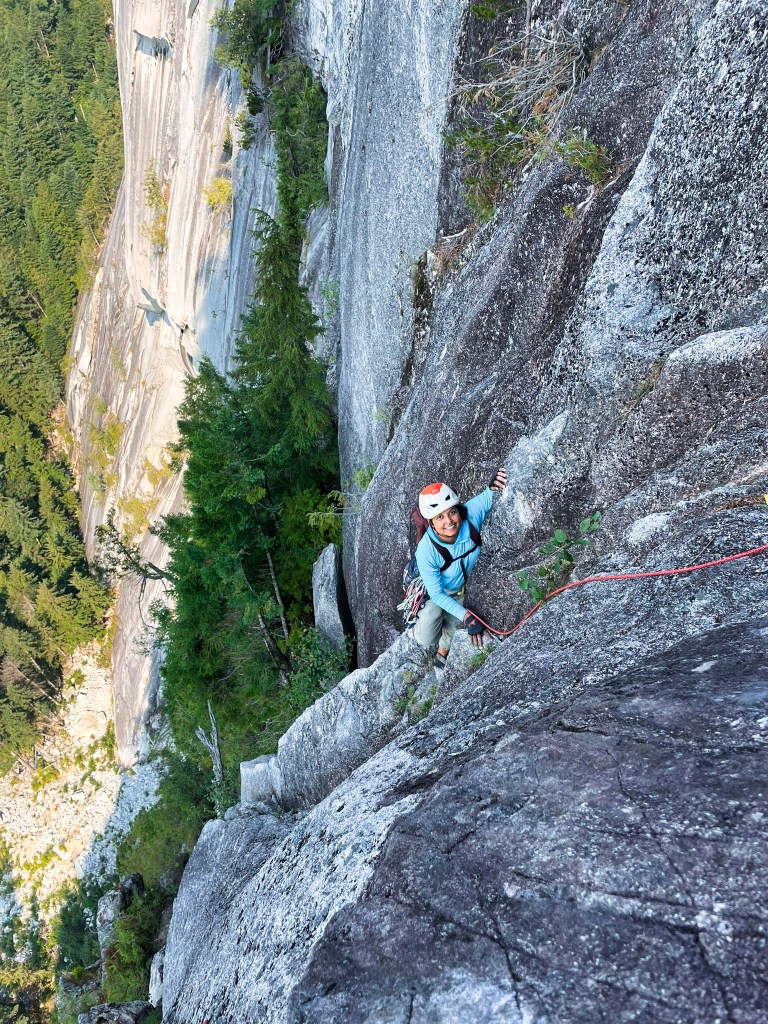
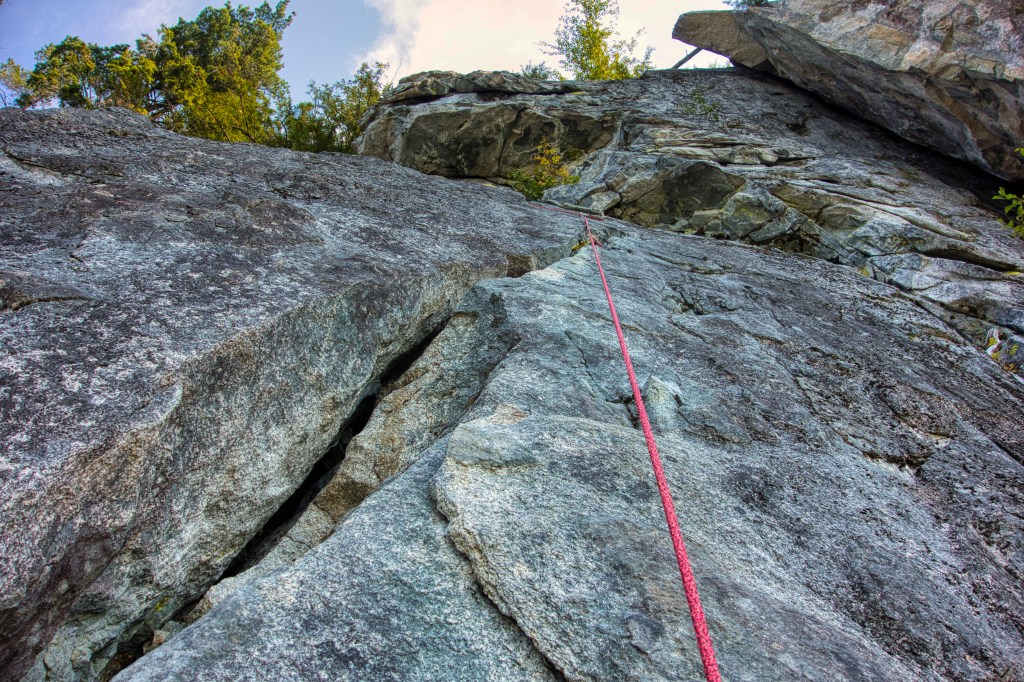
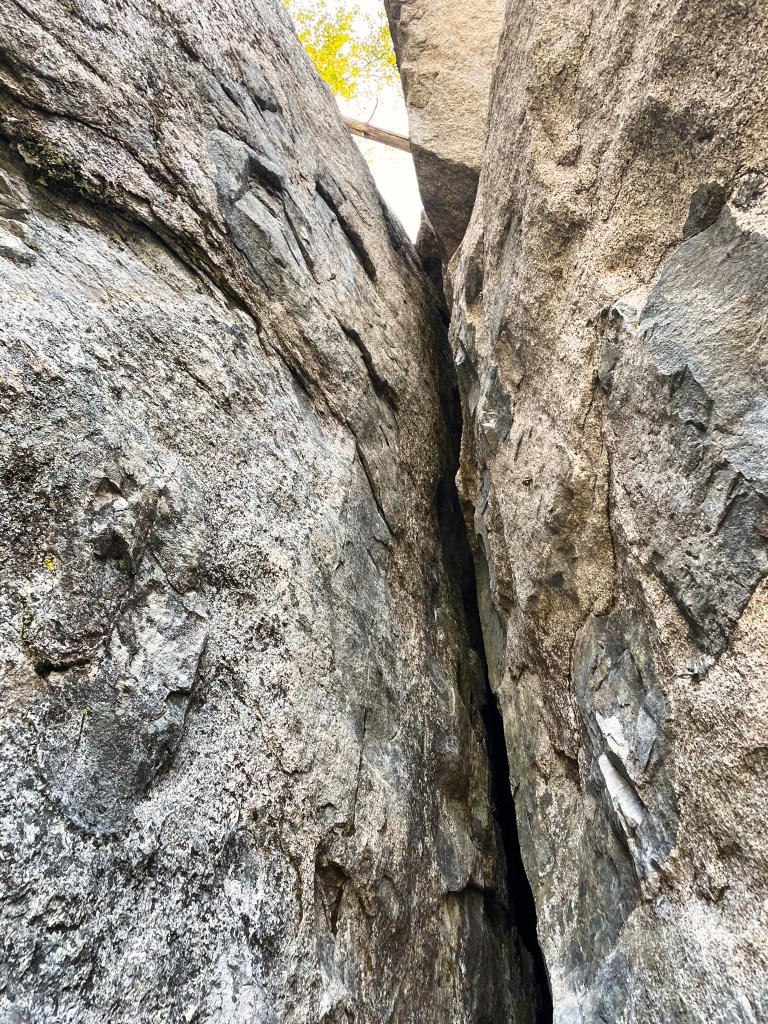
For me, this felt harder than any chimney on Epinephrine, and harder than any OW/chimney pitch I’ve done at this grade. The chimney here is open on both sides, which means it protects — thankfully — with four or five bolts. Reaching that first bolt, though, is its own mental event. It sits high enough that the leader fall before clipping feels like you’re about to tumble into an abyss.
This is also where Rick’s onsight streak gained almost mythical status. Three climbers below — our Taiwanese followers and myself — were watching him, silent, holding their breath. Naturally, he had to deliver, and to his credit, he climbed it with composure that lived up to their expectations.
As we discovered, back-on-left-wall worked best. The leader can get slightly deeper and use true squeeze-chimney technique; however, the follower will have to accept an uncomfortable amount of slack if they choose to squeeze. The chimney widens toward the bolt, and climbing directly beside the bolt is particularly difficult for climbers around 5’8”–5’9”. It’s a pitch that forces height-dependent problem-solving — and a reminder that humility is part of the game.
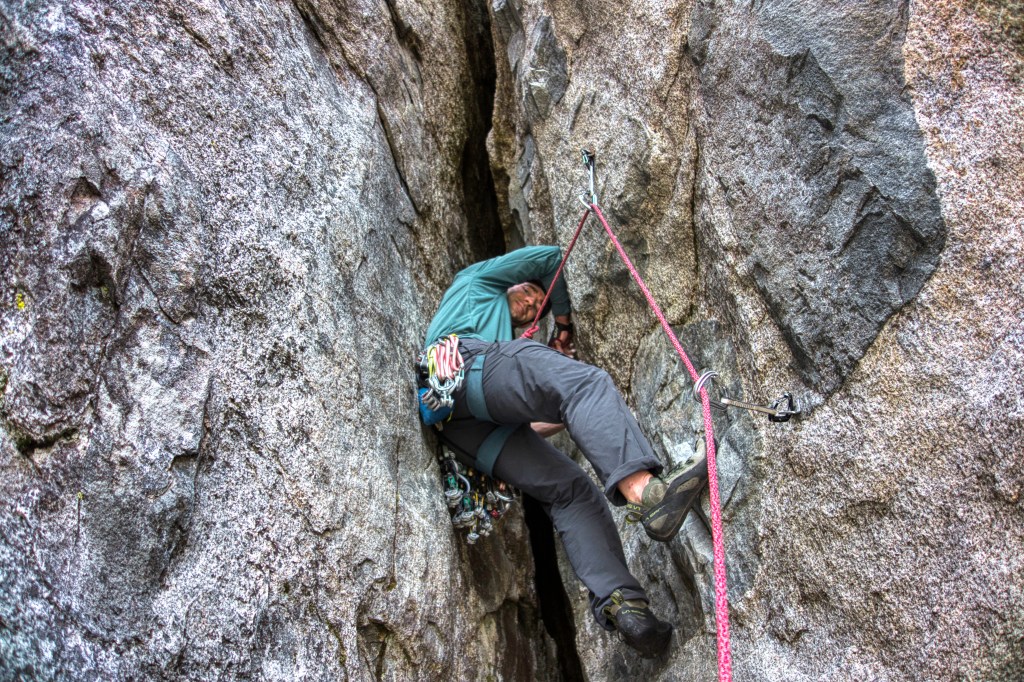
We summited at 5:17pm and descended quickly to get Vietnamese Pho and ice-cream at Alice and Brohm.
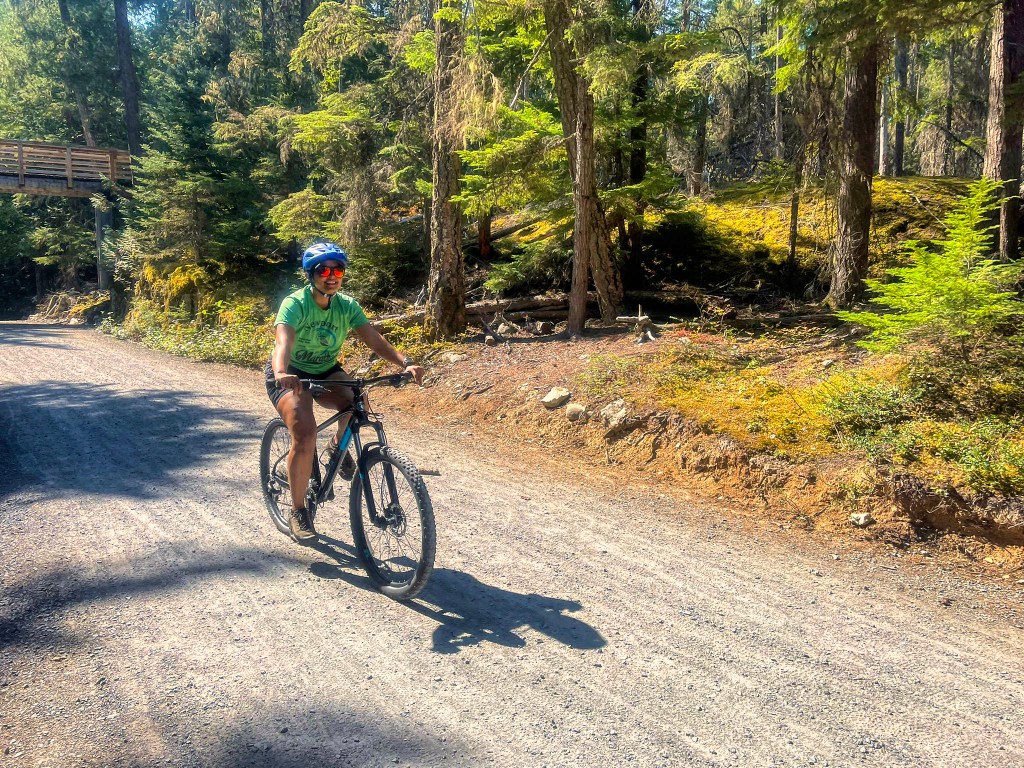
The next morning, our bodies made it very clear that Sunset Strip had taken a deposit from every muscle group we own. We declared it a “rest day” — and then, in true climber logic, drove to Whistler and mountain-biked 12 miles without biker shorts. That was… absolutely not rest for the bums.
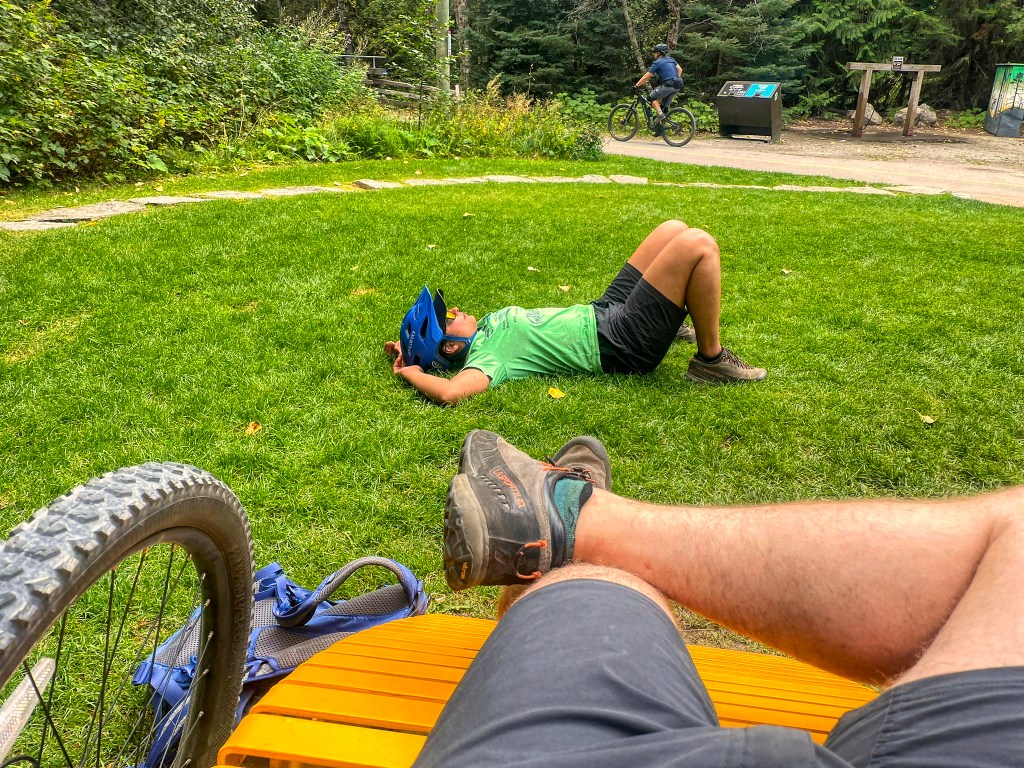
The following day, we finally honored the meaning of “recovery” — which, in our world, meant biking 12 miles on cushy e-bikes around Squamish, silently thanking whoever invented a motorized assist. After that, we packed up and drove back to Portland — tired, proud, and carrying the smug, quiet satisfaction that only arrives after granite has personally handed you your lesson.
Sunset Strip didn’t just test us — it measured us. It showed us where we’re strong, where we need refinement, and what the next chapter requires. It sharpened our movement, humbled our ego, and added a new story to the granite-etched timeline of our climbing life.
We left Squamish with sore hands, full hearts, and one very clear conclusion:
To stand on The Grand Wall — the way we want to — we must train harder, climb harder, and step into that line with even greater intention.
And that, honestly, feels like the best part:
not that this climb is behind us,
but that the next one — the Grand one — still waits.
 Dasherton Climbs